

$60.00 U.S. (trade discount)
No e-book has been authorized.
Hardcover with jacket
96 pages with 57 panoramic color photographs by the author
15.0″ x 9.0″ horizontal/landscape
ISBN: 978-1-938086-01-4
Published in Spring 2013
Distributed by Casemate/IPM
www.casemateipm.com
No e-book has been authorized.
Events and Exhibitions
February 27, 2014
Talk and book signing
Museum Visionaries support group, Orange County Museum of Art Newport Beach, CA
December 5, 2013
Book signing
Laguna Art Museum, Laguna Beach, CA
September 20, 2013
Lecture/talk and book signing
Nevada Museum of Art, Reno, NV
Landscape into Abstraction (2013-2014 group exhibition)
Orange County Museum of Art, Newport Beach, CA
August 24 – December 8, 2013 (one person exhibition)
Las Vegas Periphery: Views from the Edge
Altered Landscape Gallery, Nevada Museum of Art, Reno, NV
Photographs by Laurie Brown
with an introduction by Sally Denton
Laurie Brown has long been fascinated with what happens at the edge of cities. In her pioneering photographic work on the lands and suburbs south of Los Angeles, her focus was on the terraforming activities in that quintessential modern geography, where nature is literally scraped away and terraced to accommodate the most recent version of the American Dream: more roads and highways, more residential and commercial developments, more golf courses and city services, more pressure on the natural systems that undergird the entire region.
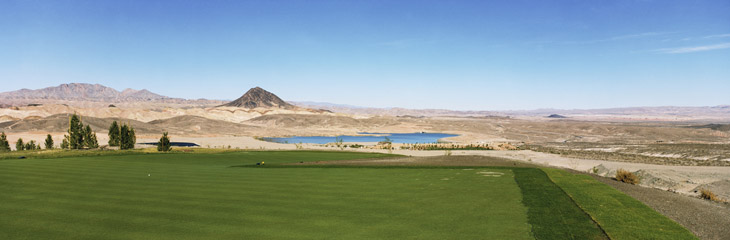
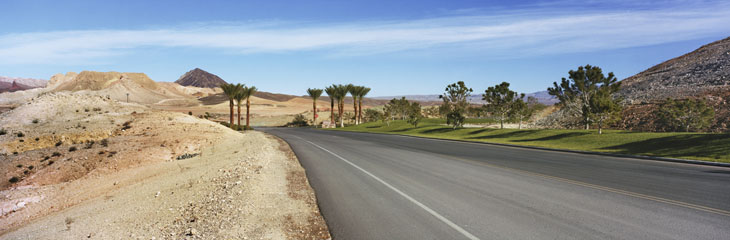
It was only natural that Brown would turn her artistic attention beyond the Los Angeles corridor to its eastern extension —Las Vegas—and she does so in full, living color. Few other places engender such a common image of excess and extravagance as does Las Vegas. But Brown reminds us that what makes Las Vegas such an alluring place to live and to visit is its location in the austere but beautiful landscapes of North America’s driest and sunniest region: the magnificent Mojave Desert.
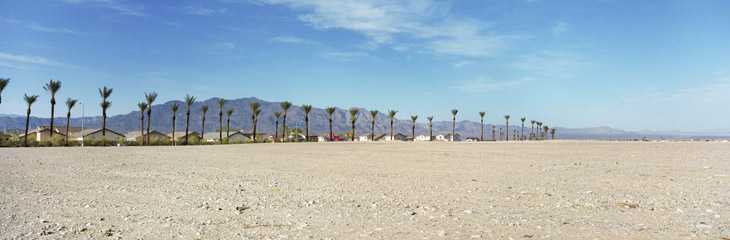
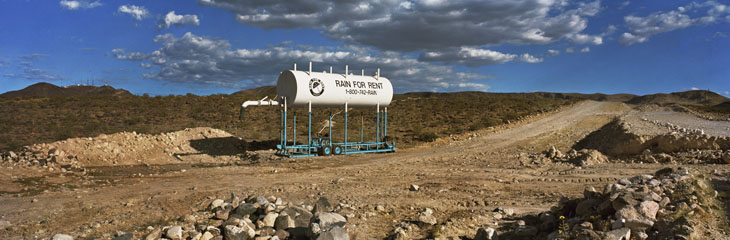
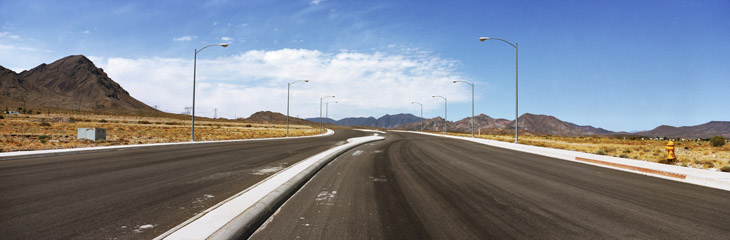
As Las Vegas has expanded, the contrast between the native desert and recent human terrain is a palpable fact that Brown captures brilliantly in her panoramic format. In each photograph we see the impact of our newest designs and constructions on the land, raising questions about the availability of scarce natural resources and, ultimately, the wisdom of our vision for the place.
By finding the interface between nature and culture that exists in these so-called paradisal environments, Laurie Brown takes us on a modern version of a well-worn path in Western civilization: the pushing out of the city that emerged in ancient Greece and Rome and extended beyond the city walls of medieval Europe to today’s political boundaries nestled beside nature’s undeveloped frontier. But at what cost? Like the ruins of Pompeii, Brown’s hauntingly beautiful photographs reveal how well (or not) we have created a modern American Eden: Las Vegas.
About
About the Author
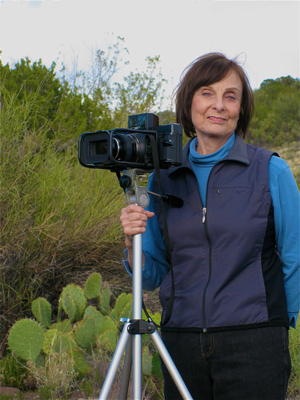
Laurie Brown was born in Austin, Texas, in 1937 and was raised in Los Angeles, California. She completed her B.A. in international relations at Scripps College and received her M.A. in fine arts at California State University, Fullerton. In 1978, Brown was awarded a National Endowment for the Arts Fellowship in Photography and, in 2002, was designated the Outstanding Individual Artist of the Year by ARTS Orange County. Her first book of photographs, Recent Terrains: Terraforming the American West, was published in 2000 by the Johns Hopkins University Press in association with the Center for American Places as part of George F. Thompson’s Creating the North American Landscape series. Brown’s photographs are in the permanent collections of the Center for Creative Photography, Los Angeles County Museum of Art, Minneapolis Institute of the Arts, Museum of Fine Arts, Houston, New Orleans Museum of Art, Philadelphia Museum of Art, San Francisco Museum of Modern Art, and Santa Barbara Museum of Art, among others. She has had one-person and group exhibitions at numerous institutions, including the California Museum of Photography, Laguna Art Museum, Museum of Contemporary Art, San Diego, Nevada Museum of Art, Oakland Museum, Orange County Museum of Art, Palm Springs Art Museum, San Francisco Museum of Modern Art, and Sezon Museum in Tokyo. Brown currently resides in Newport Beach, California.
About the Essayist
Sally Denton born in Elko, Nevada, in 1953, is a third-generation Nevadan. She attended the Uni- About the Author versity of Nevada-Reno before completing her B.A. at the University of Colorado in Boulder in 1974. Denton received a Lannan Literary Grant in 2000, Western Heritage Awards in 2002 and 2004, and a John Simon Guggenheim Memorial Foundation Fellowship in General Nonfiction in 2006. In 2008, she was inducted into the Nevada Writers Hall of Fame. Her career as an investigative reporter resulted in articles in The Washington Post, Penthouse, The New York Times, Columbia Journalism Review, and American Heritage. Her books include The Bluegrass Conspiracy: An Inside Story of Power, Greed, Drugs, and Murder;The Money and the Power: The Making of Las Vegas and its Hold on America (Alfred A. Knopf, 2001) co-authored with Roger Morris, which was made into a documentary film broadcast on the History Channel, Faith and Betrayal: A Pioneer Woman’s Passage in the American West (Alfred A. Knopf, 2006); Passion and Principle: John and Jessie Frémont, the Couple Whose Power, Politics, and Love Shaped Nineteenth-Century America (Bloomsbury, 2007); and The Plots Against the President: FDR, a Nation in Crisis, and the Rise of the American Right (Bloomsbury, 2012). Denton currently resides in Santa Fe, New Mexico, and her Website is www.sallydenton.com.
Slide Show
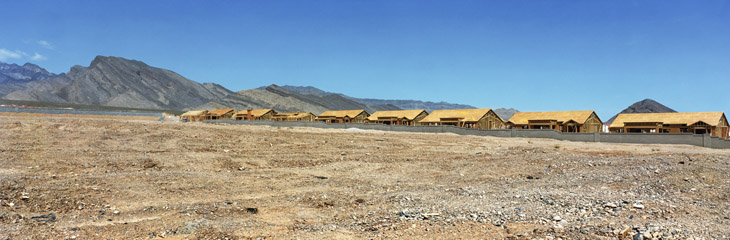
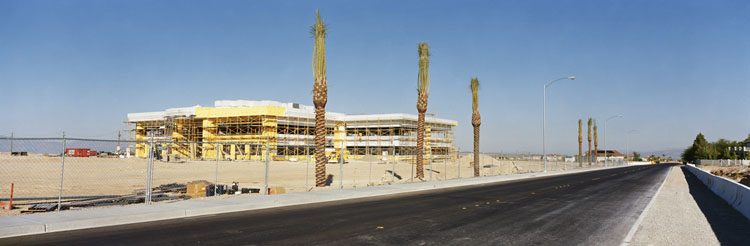
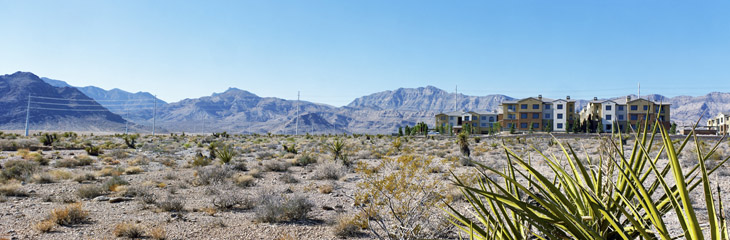
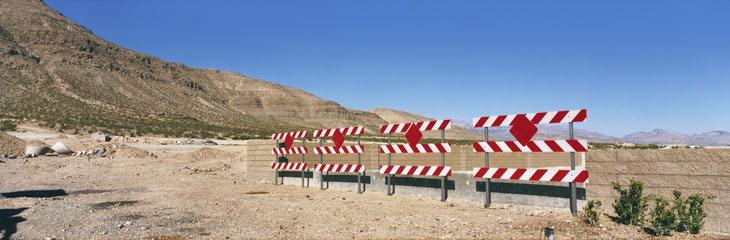
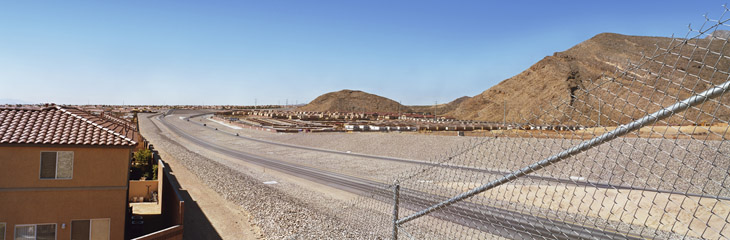
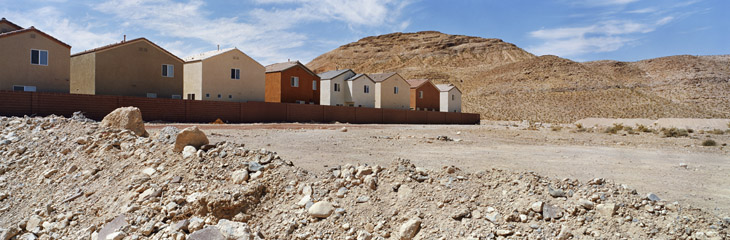
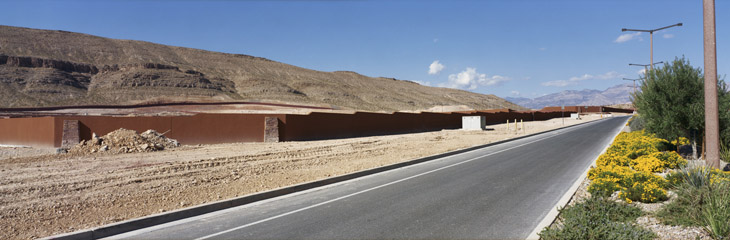
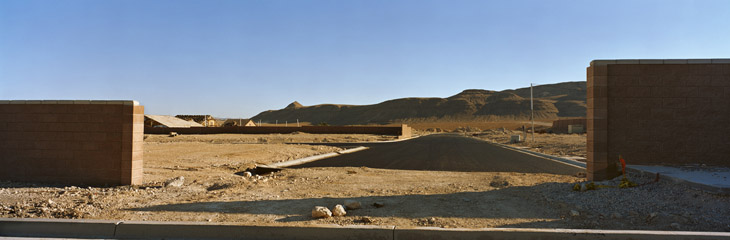
Praise
“Right from the get-go, Laurie Brown got ahold of a BIG subject, which is why she has always needed the wide format that the panorama provides. Luckily, she took an introductory photo class in 1971 from the then obscure Lewis Baltz, who was about to become the seminal force behind the New Topographics movement that changed American landscape photography forever. Before, a modernist, formalist aesthetic had been in love with that landscape. Now, the two were at odds, and this made the photography even more complex and interesting. Brown began to look at the SoCal vistas in which she and Baltz had grown up in a new way. She saw that giant earthmovers were turning the virgin, rolling hills into an almost unrecognizable new tract-house landscape through a process called ‘terraforming.’ From then through ‘Lake Las Vegas,’ her vision has never blinked.”
—Colin Westerbeck, Contributing Writer to Art in America and former Director of the California Museum of Photography
“Laurie Brown’s panoramic photographs of Las Vegas, Nevada, reveal lush green grass, artificial waterways, and tropical palm trees set against a stark, waterless desert landscape. For Brown, who has documented suburban spaces and the altered landscape for more than forty years, these easily overlooked peripheral areas—where vulnerable wilderness meets encroaching suburban sprawl—reveal the all-too-real paradoxes of life in the desert. Brown’s engaging photographs ask us to consider how far Las Vegans will go to live in a place not intended for living and whether their desires to do so are, in the end, sustainable.”
—Ann M. Wolfe, Curator of Exhibitions and Collections at the Nevada Museum of Art and author of Suburban Escape: The Art of California Sprawl (2006) and The Altered Landscape: Photographs of a Changing Environment (2011)
“Las Vegas Periphery by photographer Laurie Brown with an essay by Sally Denton is not a book about the famous Sin City. This one is about “Views from the Edge,” with beautiful, full-color photos printed one on each of the large-format pages of this lovely photography book. The essayist grew up in the area and tells the history of the growth of this area of Nevada, which had only about thirty homesteaders in 1905 when the first railroad reached there. In 1931, Nevada legalized gambling, and that set the stage for enormous growth. These photographs honor the part of this vast desert that was not victim of the huge city. The desert is both beautiful and unrelenting and could at any moment destroy the city. This is a book you will want to own if you travel or live there.”
—Bonnie Neely, owner of Real Travel Adventures and book reviewer for Amazon
“Las Vegas, Nevada, is one of America’s iconic cities. It is an artificial oasis in an American desert powered by the Hoover Dam and an American love of gambling. Enhanced with an informed and informative introductory essay by third-generation Nevada resident and investigative reporter Sally Denton, Las Vegas Periphery is a 96-page compendium showcasing the photographic talents of Laurie Brown. The full-color visual theme is the country surrounding the edges of the city of Las Vegas. Las Vegas Periphery would make a welcome and highly recommended addition to personal, professional, and academic library Photographic Studies reference collections.”
—James A. Cox, Editor-in-Chief, Midwest Book Review
“Los Angeles–based photographer Laurie Brown likes to study what cities and surroundings look like as they fade into each other along the urban peripheries. Eighty–nine panoramic photos of the edges of Las Vegas are presented in this horizontal–format book (15.5″ x 9.5″), along with an essay about Las Vegas by writer and third–generation Nevadan Sally Denton.”
—Eithne O’Leyne, Editor, ProtoView, Ringgold, Inc.
“For all its swagger, for the raw presumptuousness of its money and machines, Las Vegas has a fragility and precariousness that is palpable. The city is the ground-zero crossroad where ancient landscape meets modern artifice. There is a sense that it could all blow away tomorrow. That the same forces that have ruled the desert since the beginning of time could swiftly reclaim these castles in the sand.
I am a third-generation Nevadan, and my roots are deep in the Las Vegas Valley. I am descended from a long line of Western pioneers who understood that the desert challenges men and women in unique ways. In a land where water is everything, where everything competes for what little water exists, where rivers run into each other instead of into the sea, the challenges for survival happen every place, at every moment. From the spiky cactus and creosote bush that struggle for a scraggly survival to the vista teeming with wildflowers that suddenly appear after a cloudburst, the balance and harmony of the desert’s fragile ecosystem is perpetually at work.
For most people, the image of Las Vegas brings to mind neon lights and screaming jackpots, Mafia murders and high-stakes shenanigans. But, to my mind, Las Vegas conjures the arrestingly beautiful scenery captured by Laurie Brown and her incisive portrait of the colossal, often controversial, efforts to tame and transform it.”
―Sally Denton, from her introduction, “Beyond the Strip”