

$39.95 U.S. (trade discount)
E-book TBD.
Hardcover/PLC
164 pages with 148 color photographs by the author
8.0″ x 10.0″ (upright/portrait)
ISBN 978–1–938086–55–7
Published in April 2018
Distributed by University of Virginia Press
Events and Exhibitions
November 15, 2021 – January 17, 2022
Two images included in the Maryland Regional Virtual Exhibition Series, Maryland State Arts Council.
View online here.
February 2021
Collage accepted to Maryland State Arts Council Identity exhibition. View online here.
September 27, 2018 at 9am
On-air interview with E. Ethelbert Miller
“On The Margin” on WPFW 89.3 (archived podcast)
Taylor’s photos were published in the October, 2019 Burningword Literary Journal.
Taylor’s non-fiction prose was included in the 12th Annual Delmarva Review. A new book review of Listening In, provided by Crystal Brandt, is included in the same publication.
Taylor’s short video “Mapping for the Future” was selected for the 2019 Southern Maryland Film Festival.
by Merideth M. Taylor
Foreword by Jeffrey Hammond, with a poem by Lucille Clifton
St. Mary’s County is where colonial Maryland began, when St. Mary’s City was established as Maryland’s first capital in 1634 on the site of an ancient Yaocomico village. Southern Maryland has been home to human occupation for at least 12,000 years and, since 1634, has seen the rise and fall of tobacco agriculture with its associated enslaved labor and the shift to a modern economy based on aerospace technology. Home to the Patuxent Naval Air Station since 1942, the county is on the threshold of becoming a bedroom community to Washington, D.C., Annapolis, and Baltimore. As the area’s rural character slips away, ties to the past become increasingly important.
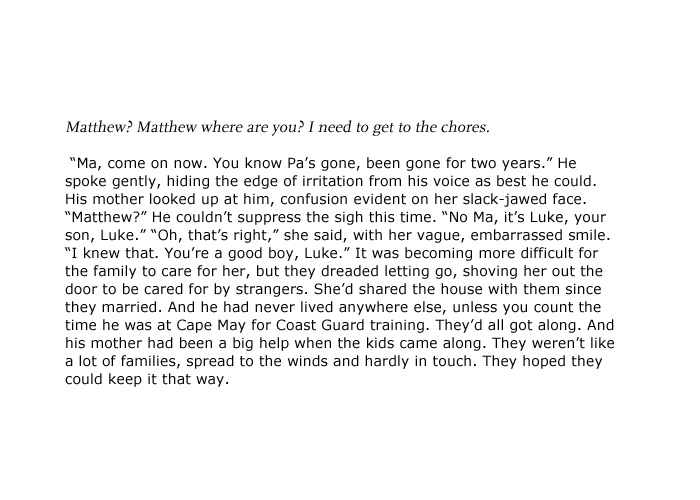
In Listening In, Merideth Taylor provides a captivating, even pioneering approach to capturing the land and life of Maryland’s “mother county.” She integrates her own engaging photographs of buildings of all kinds, many of them in disrepair, with imaginative text called “ghost stories” that are based on living oral histories and relate to the photographs in one way or another. And so we gain a true sense not only of what life in historic St. Mary’s County was, but also the place it is becoming.

About

About the Author
Merideth Taylor is Professor Emerita of Theater and Dance at St. Mary’s College of Maryland. Taylor received an Individual Artist Award in playwriting from the Maryland State Arts Council in 2003 and 2007 and received a 2007 Maryland African American Heritage Preservation Award and a 2007 St. Mary’s County Historic Preservation Service Award for the book, In Relentless Pursuit of an Education: African American stories from a Century of Segregation, which she co-edited. In 2010, Taylor received a Historic Preservation Service Award from the St. Mary’s County Historic Preservation Committee and County Commissioners for the video documentary, With All Deliberate Speed: One High School’s Story, which she co-produced, wrote, and directed, and, in 2011, a Communicators International Award for her short film, Historic Sotterley: A Tidewater Legacy. The films were selected for inclusion and awards in the 2016 and 2017 Southern Maryland Film Festivals. Taylor was honored in 2016 by the St. Mary’s County Branch NAACP with a Lifetime Achievement Award for her use of the performing arts to produce positive social change.
About the Contributor
Jeffrey Hammond is the George B. and Willma Reeves Distinguished Professor in the Liberal Arts and Professor of English at St. Mary’s College of Maryland. He has published three scholarly books, and his literary nonfiction has won two Pushcart Prizes, been awarded Shenandoah’s Carter Prize for Essay and The Missouri Review Editors’ Prize for Essay, and has appeared in such journals as American Scholar, Gettysburg Review, Southern Review, and Virginia Quarterly Review.
Slide Show


Praise
“Taylor provides the image, story (description) and dialogue (comments) that work together to satisy our shrinking attention span and growing appetite for information. Before we know it, we are engaged, our memories enhancing and underscoring what’s on the page. If the images of decay seem foreign and obsolete, Taylor’s skillful dialogue feels familiar and necessary, like we’ve heard it before but need to hear it again.”
—Crystal Brandt, Southern Maryland This is Living magazine (read the full article here, pdf)
“For more than 20 years, Merideth Taylor has been bearing witness to old, fading buildings in St. Mary’s County, Md., where she lives. Most are small homes or farmsteads, empty and cloaked in a mantle of abandonment and decay. Contained in their flaking paint, sagging roofs and enveloping vines are the traces of lives that have been lived and the joys and sorrows of the people who once occupied them. These ‘ghost voices,’ as she calls them, have been captured in her book, Listening In. Her images are accompanied by imagined narrative vignettes for each property, where fictional occupants speak to one another.”
—Adrian Higgins, Washington Post, read the full artice here
“Listening In captures twentieth-century life in St. Mary’s County that could easily have been forgotten as progress in the twenty-first century speeds along. I highly recommend this delightful and important book with its beautiful photography and engaging vignettes inspired by local oral histories.”
—Dr. Barbara Luck Bershon, former Chair of the Maryland State Arts Council
“Merideth Taylor has given the people of St. Mary’s County and all who come to know its unique voices and places an incredible gift in the form of Listening In, her brilliant new book. Through her creatively written “ghost stories” and perfectly chosen photographs, she imagines conversations in the homes, churches, schools, barns, businesses, and other structures, mostly in sad condition, over the course of a century or more. It was a bold decision for Taylor to adopt such an untraditional approach to convey the stories of the people and places in St. Mary’s County, but she succeeds beautifully. It’s history, for sure, but it’s much more than that: Taylor’s book allows the reader to get a deep sense of who these people are and where they lived and worked and spent their time. Most writers and artists could not have accomplished this feat, but the very talented Merideth Taylor employs her many gifts to draw us in as real-time observers. Listening In is a great treat, and I strongly recommend it.”
—Richard Moe, Former President of the National Trust for Historic Preservation (1993–2010)
“We have all seen old buildings, peeping out from behind screens of brush, sinking slowly back into the earth, farms and stores and homes whispering to us of the past. Merideth Taylor amplifies their voices, giving us brief, poignant, and evocative glimpses into the lives, loves, and losses that these buildings have seen. Her stories, though imagined, are so well grounded in their place and time in history that they ring indisputably true, capturing the heroic, the tragic, the joyful, and the playfulness of everyday lives lived in St. Mary’s County’s past. Accompanied by vivid photographs, the stories help us remember that homes fallen to ruin were once filled with real people. We are reminded of their work, of their hopes, and how they are woven into the history of southern Maryland. Listening In is a stunning, gripping, beautiful, and important book.”
—Elizabeth Pickard, Director of Interpretation at the Missouri History Museum
“St. Mary’s County, Maryland, has been home to humans for the past 12,000 years. Its fertile fields and dense woodlands are bisected by numerous rivers and streams, all flowing into Chesapeake Bay. The county’s past is rich, varied, and as old as time itself, and Merideth Taylor understands the complexity of that past, as she so ably demonstrates in Listening In. Her keen sense of place and understanding of its importance is impeccable, and her photographs and stories truly capture the essence of St. Mary’s County, where colonial Maryland began. You can almost smell tobacco curing in the barn, feel the breezes off the St. Mary’s River, hear the snap of canvas sails and taste the homemade biscuits. Merideth Taylor’s book is based on a deep understanding of her home and its people, both past and present.”
—Patricia Samford, Director of the Maryland Archaeological Conservation Lab, Jefferson Patterson Park and Museum
“Listening In is a book about the lives of ordinary people and the threads that connect them to one another and to places familiar but forgotten. What is past is prologue, and there is great power in Taylor’s words and images. Her book is a love letter to rural Maryland.”
—Fred Tutman, Patuxent River Keeper
“Listening In is an innovative combination of artwork, novel, and history. Seldom have I seen such a creative and refreshing way to tell the history of a place.”
—Kenneth Cohen, Curator of American Culture at the Smithsonian National Museum of American History
“In Listening In, Meridith Taylor documents the radically changed and changing landscape of St. Mary’s County and does so in an unusual and unique way that is intensely personal. Creating brief scenes as if in a play or dance, her approach clearly draws upon her experience in theater and dance, in teaching and living, in remembering youth and growing old, and in traveling afar and being at home. To tell this beautifully evocative story of place, Taylor combines fiction and fact and travels down rural county roads and old downtowns with her camera, photographing what she has seen and savored over two decades of living here in Maryland’s mother county. She has a gift for photography, reminiscent of the photographers of the New Deal. Enlivening her images is her written narrative, penned as if she is “listening in” to conversations people from all walks of life had with themselves or with friends and family, all of which she imagines. The result is a book that is a pleasure to read but, just as important, one that inspires the reader to look anew at what may seem to be commonplace in the St. Mary’s landscape and to venture forth into one’s own imagination and to join Taylor in “listening in.”
—George W. McDaniel, Ph.D., author of Hearth and Home: Preserving a People’s Culture
My Place

Paddling our canoe down the St. Mary’s River during the early 1990s with my partner, Bob, I looked up at the hills overlooking the marsh and wondered aloud, “Wouldn’t it be wonderful to live up there?” We had moved to St. Mary’s County on the southern tip of Maryland’s western shore when I accepted a position at St. Mary’s College, and we were out exploring our new territory. In an extraordinary stroke of luck mixed with Bob’s inspired real-estate negotiating and his carpentry talent, we were able, in spite of modest means, to purchase land and build a house right where we had focused our eyes so dreamily on that first trip down the river.
For more than twenty-five years we have looked out over the Western Branch, a brackish tributary of the St. Mary’s, as it winds through the marsh, rising and falling with the tide, and have been treated to daily views of an amazing range of flora and fauna. The birds common to our “front yard” include eagles, osprey, egrets, green and great blue herons, Canada geese, a variety of ducks, turkeys who nest in our pines, hawks and owls who harass our chickens, and the ubiquitous cardinals, robins, and a wonderful variety of song birds. Deer often wander into the marsh to take a drink, and sometimes we spot beavers, muskrats, otters, and nutria in the water. The deer, raccoons, squirrels, rabbits, foxes, and skunks are more often seen and/or heard in our “backyard,” and a garden surrounded by a high fence is a necessity here if you want to eat some of your own crops.
I never tire of watching the change in light and color as the seasons in the marsh come and go and the days shorten and lengthen. The blooming rose mallow in mid-summer and fall colors in the hickories, oaks, and ash among the pines and holly are favorites. I am aware that the marsh, along with all its feathered, furred, finned, and leafed inhabitants, is threatened here, as elsewhere, by climate change, and I have solemnly promised myself never to take for granted my great good fortune to be in this place at this time.