

$50.00 U.S. (trade discount)
No e-book has been authorized.
Hardcover with jacket
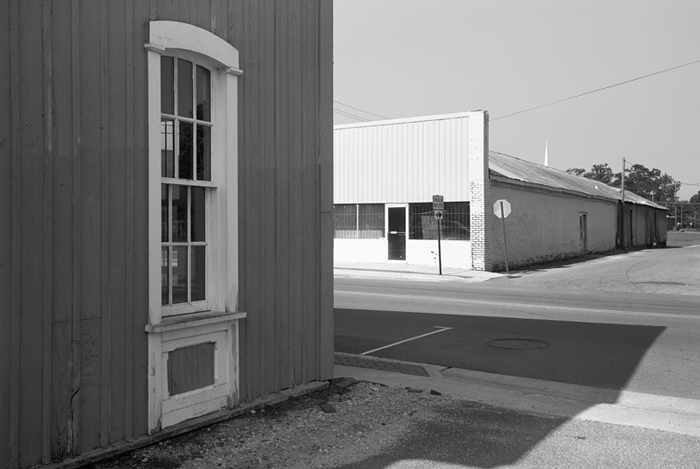
160 pages with 116 duotone photographs by the author
11.0″ x 9.0″ landscape/horizontal
ISBN: 978-1–938086–09–0
Published in Fall 2012
Distributed by Casemate/IPM
www.casemateipm.com
This is the first book in Wharton’s Trilogy of the American South (2021), ISBN 978-1-938086-90-8 (click for details)
Events and Exhibitions
November 10 – December 13, 2015
Opening reception: November 13
Mary C. O’Keefe Cultural Center, Ocean Springs, MS
Exhibition: Places People Make: Photographs from the American South

June 8, 2013
Mississippi University for Women, Columbus, MS
Public talk and book signing
April 4, 2013
University of Alabama in Tuscaloosa
Public talk and book signing (click for pdf of poster)
March 1, 2013
Black Swan Rare Books, Staunton, VA
Presentation and book signing

March 27—April 26, 2012
Lecture and reception: April 26, 2012
Missouri State University, Springfield, MO
Brick City Gallery, 215 West Mill Street
Exhibition: Photographs of the American South
February 27, 2013
Virginia Military Institute, Lexington, VA
A lecture and book signing at Virginia Military Institute in the Turman Room of Preston Library, sponsored by the Dean’s Academic Speakers Fund (click for pdf poster)
November 27, 2012
Square Books in Oxford, MS
Book signing
March 27—April 26, 2012
Lecture and reception: April 26, 2012
Missouri State University
Springfield, MO
Brick City Gallery, 215 West Mill Street
Exhibition: Photographs of the American South
by David Wharton
Winner of the 2013 Mississippi Institute of Arts and Letters Award in Photography.
Since 1983 David Wharton has photographed the twelve states that define the American South, focusing his attention on rural and small town culture, vernacular architecture and landscape, the role of religion in Southern life, and the relationship between Southerners, their natural surroundings, and the communities they have built. Small Town South is the result of Wharton’s extensive travels throughout the region.
No other photographer has devoted so much time and attention to recording this distinctive American place. The author’s 116 duotone photographs, combined with his insightful text, convey an overall sense of what the small Southern town looks like at the turn of the twenty-first century. Wharton organizes his study into thematic portfolios that visually address themes such as decline and renewal on Main Street, the intersection of tradition and modernity, local commemorations of the past, the omnipresence of the church in town life, the difficulties of making a living in the New World economy, the display of public murals and memorials, and the iconographic unfolding of community values.
Many have likened Wharton’s photographic eye and approach to the work of other photographic masters of the South, including Walker Evans, Eudora Welty, William Christenberry, Shelby Lee Adams, and Mike Smith. Just as we turn and return to those artists in reckoning with Southern history and culture, so, too, can we now look to David Wharton as a new pioneer photographer of the small town South in all its simplicity and complexity.
About

About the Author
David Wharton was born in New York City in 1947 and grew up in New Jersey. He attended Colgate University, where he earned his B.A. in English in 1969. After an extended trip through Andean South America in 1974, he resolved to teach himself how to use a camera and make photography his life’s work. From 1976 to 1978 he worked as a photojournalist for the Willamette Valley Observer in Eugene, Oregon. He then entered graduate school at the University of Texas at Austin, where he earned his M.F.A. in photography in 1986 and his Ph.D. in American studies in 1994. He taught at the University of Texas at San Antonio from 1996 to 1998 and, from 1999 until his death on September 25, 2022, was Director of Documentary Studies and an assistant professor of Southern studies in the Center for the Study of Southern Culture at the University of Mississippi in Oxford. His photographs have been exhibited throughout the United States, Latin America, and Europe, and he is the author of a trilogy of books on the American South: Roadside South (2022), The Power of Belief: Spiritual Landscapes from the Rural South (2016), winner of the 2017 Mississippi Institute of Arts and Letters Award for photography, and Small Town South (2012), winner of the 2013 Mississippi Institute of Arts and Letters Award for photography, all published by George F. Thompson Publishing. His first book, The Soul of a Small Texas Town: Photographs, Memories, and History from McDade (University of Oklahoma Press, 2000), set the table for Wharton’s Trilogy of the American South.
Slide Show




Praise

“‘Sense of place’ is a term that is synonymous with the art of the South. It is a term that describes what Southerners hold dear within their psyche and art—a reverence for the land, community, and history. Since 1983, photographer David Wharton has focused his camera on a particular place. A place that at one time defined America yet now is often overlooked and forgotten in our twenty-first century urban society. David Wharton photographs small towns in the American South.
The book Small Town South, published by George F. Thompson Publishing in 2012, contains 116 duotone photographs of ninety-four small Southern towns in fourteen states. Small Town South is the culmination of work made by Wharton between 1999 and 2011. These black-and-white photographs are, for the most part, devoid of people. They are instead ‘townscapes’ that focus on the physical elements of rural communities: contemporary and vernacular architecture, signage, murals, streets and highways, town squares, and historical monuments. These elements serve as signifiers to the cultural values and the social and economic conditions of these communities at the dawn of the twenty-first century.
Wharton’s photography continues a documentary tradition that is grounded in the visual narrative. His approach to the subject shares characteristics with the work of photographers such as Walker Evans, Eudora Welty, Lee Friedlander, and William Christenberry. Like these photographers, Wharton’s comprehensive and in-depth study of a particular place at a particular time serves as a permanent document to future generations of ‘how we were’ and ‘what we looked like’ at the beginning of the twenty-first century in the small towns of the American South.”
—Richard McCabe, Curator of Photography, Ogden Museum of Southern Art

“Small Town South by David Wharton is a black-and-white photography essay on small towns typical of the South in the United States. The photos are taken from unique points of view with the purpose of telling a story of yesterday and today. Each reveals something of the past, when some of these towns were thriving. But the photos are of today, showing, in some cases, that the town has fallen on hard times and many people have left, sometimes leaving advertising signs from yesteryear. The photos are a bit depressing and haunting in some cases, and not really beautiful, but are truly journalistic in their unique way of documenting and era gone and an era passing.”
—Bonnie Neely, owner of Real Travel Adventures and book reviewer for Amazon

“David Wharton brings a loving and insightful vision to common scenes of small towns in the American South photographed during the first decade of the new millennium. His subjects and his straightforward style immediately inspire a comparison to Walker Evans and other early photographers such as Dorothea Lange, Russell Lee, and Arthur Rothstein who began exploring the same territory and similar subject matter during the 1930s. Wharton’s photographs both delight and confound by showing us not only what has changed, but more subtly how much seemingly remains the same yet feels disconcertingly different from the quiet main streets of Depression-era America. Although Wharton’s photographs are from ninety-four towns in a dozen Southern states, he does not attempt to create a comprehensive document of any specific town or state. Instead he focuses on the elusive flow of time and how we read time in a place. In so doing, he provides a provocative series of new photographs of the contemporary South and challenges how we might re-read the rich legacy of photographers who preceded him.”
—Thomas W. Southall, curator and author of Of Time and Place: Walker Evans and William Christenberry

“David Wharton’s Small Town South is a slow, winding visual delight of detail and uniqueness, stitched together by the region’s undying devotions to God, country, family, history, and commerce. These exquisite photographs are plainly seen, stripped of drama, yet they are rich in the quiet and complexity of place. Wharton shows us the familiar but only to a point. Though his images are not meant to provide answers to questions about the meaning of the South, they reveal many layers of small town life, giving us timeless glimpses of locales we want to know better.”
—Rob Amberg, author of Sodom Laurel Album and The New Road
“Small Town South is the single most comprehensive modern photographic survey of small Southern towns. Wharton’s purpose, though, is not simply to provide an encyclopedic coverage of a particular kind of town landscape. Rather, he concentrates his vision on what makes these towns significant in the lives of the people who inhabit them, captures the spaces they create over time…Viewing this book, I felt an emotional tug running through it that might be likened to a poetic narrative—evocative rather than explanatory and where much is left to the reader’s imagination, which is as it should be in such a beautiful book.”
—David Zurick, author of Southern Crossings: Where Geography and
Photography Meet, from his review in The Southern Register
(Click to read a pdf of the full article here)

“In an age when many people’s experience of the South is from a car window at 70 m.p.h. or through the packaged presentations at New South airports and convention centers, David Wharton beautifully slows our pace and shows us, to quote Faulkner, ‘the center, the focus, the hub’ of the South through these small town spaces. Taking us to the town squares, storefronts, memorials, main streets, and churchyards of towns throughout the region, Wharton reveals distinctive layers of creativity, culture, and time through his wry eye and careful lyricism. Documentary art at its core, Wharton’s captivating new book—refined and nuanced in all ways—reveals the cultural landscapes of the South that we must see and feel to understand fully our time and place.”
—Tom Rankin, Director, Center for Documentary Studies at Duke University

“To anyone who’s spent any time in, or just traveled through, a small Southern town, David Wharton’s photographs will seem both familiar and new. These are places we’ve known but perhaps never seen as Wharton presents them: often in ‘the beautiful noon of no shadow,’ in the words of one poet I admire. I love how these images accumulate, page by page, in a sense of irony and humor, persistence and loss. If Wharton’s photographs themselves comprise a kind of poem, as he proposes in his introductory essay, it is an unusually moving one—something like an ode, but with an epic sweep.”
—Rob McDonald, Associate Dean for Academic Affairs and Professor of English and Fine Arts, Virginia Military Institute, and author of four books of photography, including Poplar Forest and Cy’s Rollei (with Sally Mann and Evan Rogers)

“This limited-edition, horizontal-format book of photographs was beautifully produced by George F. Thompson Publishing and created by David Wharton (Director of Documentary Studies, Center for the Study of Southern Culture, University of Mississippi in Oxford). The author suggests viewing the photographs as a long poem in nine stanzas, where each image relates to the next in ways that evoke but may not build a narrative. The print format, where blank facing pages alternate irregularly with single images printed on each page, also helps to create a sense of slow rhythm. Wharton’s subject is the American South of small, empty towns, closely observed and mostly without commentary. The only text is at the back of the book, where each image is given its caption in a couple of sentences or paragraphs, small nonfiction stories about each place. The black-and-white images, of storefronts, signs, roads, and frame houses, have a flat clarity; they could be paintings or photojournalistic moments in which no drama is happening except what is always there. There is an incidental figure, an occasional old truck. His technique is to whisper rather than shout, and the book rewards slow looking. What the photographer draws us in to see has often been exploited for tragedy or kitsch, but Wharton is too wise and too wry; he knows this territory far too well for such easy commentary. Beneath what we thought we knew, he reveals a hieratic landscape. In Cherokee, Alabama, beside a blank brick building and an empty road, an unmarked sign says only, ‘DANCE.'”
—Eithne O’Leyne, Editor, ProtoView, Ringgold, Inc.

“The last 150 years have been hard on small rural towns. The incredible advances of the 19th Century had the dual effect of dramatically reducing the number of people required to tend farms as well as drawing those displaced former field hands towards cities with blooming manufacturing bases. The result is a string of small towns that have, undeniably, seen better days. And David Wharton captures slices of this reality. Wharton is quick to assert, however, that it’s not quite so hopeless as all that…And make no mistake: there is beauty in the desolation. A welcome home sign for a local National Guard unit being blown violently by an 18-wheeler driving through a town in which it will not stop evokes at once the history and the culture and the life of those towns we all pass by on the freeway. Towns that will never be more than a name on a sign to most of us but which are and have been home to generations of Americans. Wharton shows a keen interest in establishing that sense of place. A Burger King sign inviting customers to ‘Try Our New Bacon Swiss’ across the street from a plaque commemorating a Civil War battle is, undeniably, a reflection of the South today. Small Town South captures this, and many other moments, with clarity and insight and organizes the pictures with thoughtfulness and intent.”
—Pelham Anderson, from his review in The Planet Weekly

“Wharton’s images are deeply felt, and they compel deep thought…The photographs include homages to history, as in the antique locomotive in Amory, Miss., and the many memorials to the war dead sprinkled throughout the book, along with newer developments like the courthouse in Hamilton, Al., a pedicure shop in Opelousas, La., or a meat store in Opelika, Al., startlingly juxtaposed with religious signage…The small towns that Wharton photographs often are places that are justifiably proud of their athletic teams, their church groups, their commercial ventures or their military units…Noting that most small towns I have visited remain racially segregated, particularly in areas of housing and some business districts, I asked Wharton if he concentrated on shooting the downtown sections to avoid racial issues. He acknowledges the predominance in the images of Confederate monuments and businesses owned by the white power structure. Yet he says that’s what he found in the small towns, and that’s what he shot. This let-the-chips-fall-where-they-may attitude pervades the entire book. It’s part of what makes Small Town South so unsettling.”
—Ben Windham, from his interview and review in The Tuscaloosa News
“I recently revisited Small Town South, the stunning book of photographs you so masterfully crafted and in such times of rediscovery wanted to send congratulations to the artist for this beautiful addition to my library. Absolutely gorgeous—I am in awe.”
—Mark Appling Fisher, photographer
My Place

In 1983, on the first of many drives between my new home in Austin, Texas, and my parents’ house in North Carolina, I made a detour to visit Oxford, Mississippi. I had read most of William Faulkner’s novels over the years and wanted to see the town that inspired the fictional Jefferson, the county seat of Faulkner’s richly imagined Yoknapatawpha County. Oxford was further out of the way than I expected, and by the time I got there I was feeling hurried. So I parked the car, took a five-minute walk around the courthouse square, got back in the car, and drove away. I had no reasonable expectation of ever being in Oxford again.
And, now, I’ve lived in Oxford for fourteen years. I came here more as a matter of circumstance than by choice, though I’m happy to have ended up here. There’s much to like about Oxford. Most of the world knows it (if they know it at all) as the home of William Faulkner, the site of the University of Mississippi (“Ole Miss” in local parlance), and the backdrop to James Meredith’s 1962 struggle to integrate the university—one of the defining moments of the Civil Rights Movement. All of these legacies draw visitors to town, and most learn, often to their surprise, that Oxford has an excellent bookstore, a sophisticated college-town populace, and several good restaurants.
But I have come to know the town differently, more intimately, and on a daily basis. I know it will rarely take me more than five minutes to get from my house to my office at the university. I know enough to stay home (or get out of town entirely) on those six autumn weekends every year when the town quadruples in size because of a home football game. I know what time to leave and what route to take in order to avoid church traffic on my weekly Sunday morning trips to the grocery store. I know that much of the summer is going to be stiflingly hot and humid, that fall is usually gentle and sweet, that winter will allow the use of a fireplace for six weeks or so, and that spring will be a long, drawn-out succession of flowers, as various trees and bushes bloom, one after another. I know enough to stay away from the courthouse square on weekend nights when the university is in session because of the large number of students who will be in the town’s many bars, celebrating their freedom from the parental restraints of home. I know Oxford’s a good town to walk in—to the Square for a cup of coffee or a beer or to browse the front tables at Square Books—or a little further to Faulkner’s grave or Rowan Oak, his restored antebellum home.
But, most of all, I like Oxford because it’s easy to get out of. A five-minute drive in any direction will have me in the country—the real country: not the large-lot subdivisions with big brick houses and acres of manicured green grass but actual land and space not always made pretty but shaped and made useful by many people over many years. Scattered throughout are hamlets like Abbeville, Lafayette Springs, Paris, Toccopola, and Yocona—each with a post office and perhaps a combined grocery store and gas station, a church or two, sometimes an elementary school and/or a pre-fab volunteer fire department building. Half an hour’s drive from Oxford will get me to towns like Holly Springs (north), Pontotoc (east), Bruce (southeast), Water Valley (south), and Batesville (west)—all except Bruce county seats and each with a history, culture, and society peculiarly its own. They are, no doubt, what Oxford would look like without the university.
I feel lucky to live in the cultured, historical Oxford, where people concern themselves with books, ideas, and civic improvement. I also feel lucky to have easy access to places where people don’t often (if ever) think about William Faulkner, the University of Mississippi, or which coffee house serves the best espresso.
Copyright © 2013 David Wharton. All rights reserved.