

$60.00 U.S. (trade discount)
No e-book has been authorized.
Hardcover with jacket
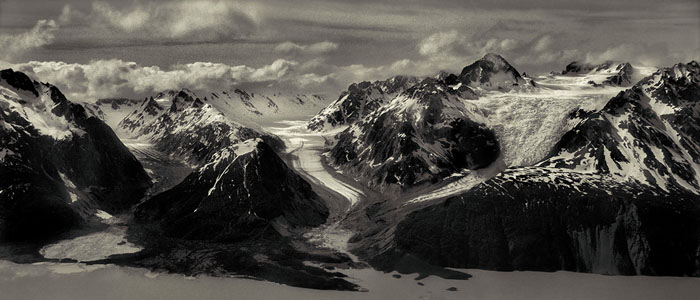
192 pages with 115 color photographs by the author
9.0″ x 11.0″ upright/portrait
ISBN: 978-1-938086-04-5
Published in Fall 2012
Distributed by Casemate/IPM
www.casemateipm.com
The Trilogy of North American Waters: West Coast, East Coast, and Mississippi River (2020) by David Freese
ISBN: 978–1–938086–76–2 (click here for more details)
Events and Exhibitions
April 9, 2014 at 7:30PM
Princeton Photography Club, Rosedale Avenue, Princeton, NJ
Lecture and presentation: West Coast: Bering to Baja
February 1—28, 2014
West Coast: Bering to Baja
Camerawork Gallery, Peterson Hall, Portland, OR
May 12—June 21, 2013
Community Arts Center, Wallingford, PA
In the Clouds – Group exhibition with extreme panoramas from West Coast: Bering to Baja
September 7—November 1, 2012
Long Beach Island Foundation of the Arts and Sciences
Loveladies, NJ
Exhibition: The Print Center, Four Photographers of the Landscape

map by Morgan Pfaelzer
by David Freese
with a foreword by Naomi Rosenblum and text by Simon Winchester
Nominated for a 2013 Independent Publisher Book Award.
There is no more beautiful or alluring coast in the world than the West Coast of North America: a 5,000-mile-long region that extends from the Aleutian Islands of Alaska to Canada’s British Columbia, south to Washington, Oregon, and California, and then to Baja California in Mexico. No photographer until David Freese has explored the various and wondrous landscapes along the Pacific Ocean in such depth, making this the first book to look comprehensively at what makes the natural beauty of this particular coast so memorable.
Behind the scenery, of course, lie the geologic forces that have created the West Coast landscapes that we now admire, explore, and praise. The engaging and informative text by renowned author Simon Winchester grounds us in understanding the deep relationship between geology and scenery. And Naomi Rosenblum, the esteemed photographic historian, writer, curator, and art critic, firmly establishes David Freese’s place among the great landscape photographers of the past and present. In every photograph, his unique vision of nature and of place comes shining through.
West Coast: Bering to Baja is a major publishing enterprise that will appeal to book-lovers of photography, nature, and those who dream of North America’s West Coast. For here we see the vital connection between art and science merge in ways previously unseen for this special region of the world.
About

About the Author
David Freese was born in Mineola, New York, in 1946 and grew up in Garden City, Long Island, New York. He received his bachelor’s degree from the University of Rochester in 1968 and, soon after graduation, taught photography in the U.S. Army Signal Corps until 1970. During the following thirty-five years, Freese worked as a freelance assignment photographer shooting corporate/industrial and editorial photography on location. He also worked as a contract photographer for Gamma Liaison in New York City and for Zuma Press in San Clemente, California.
Personal work has always been an ongoing form of expression for Freese, and he now devotes his full attention to various fine-art photography books and projects and to teaching in the Film and Media Arts Department at Temple University, where he received the 2016 Adjunct Faculty Award for his many academic contributions. He has previously taught at Saint Joseph’s University, Moore College of Art, and Drexel University—all situated in Philadelphia, Pennsylvania. In 2006, he was the founder and director of the photography degree program at Burlington County College in Pemberton, New Jersey, where he taught for twenty-five years and received the Excellence Award from the National Institute for Staff and Organizational Development for outstanding contributions to teaching, leadership, and learning.
Freese’s work has been published in Communication Arts, MIT Technology Review, Philadelphia Inquirer Magazine, Photo District News, Photo Insider, Polaroid International, Popular Photography, Smithsonian Air and Space, Time-Life Books, and View Camera. His photographs are featured on line at LensCulture and the Art Photo Index, and images have been published on line at aPhotoEditor and at Slate Behold, The Photo Blog. His photographs are in the collections of the Allentown Art Museum, Center for Creative Photography, Center for the Study of Place, Cleveland Museum of Art, Crocker Art Museum, Denver Art Museum, Haggerty Museum of Art, Haverford College, James A. Michener Art Museum, Library of Congress, Polaroid Collection, Russian Union of Art Photographers, University of California Berkeley Art Museum/Pacific Film Archive, and University of Wyoming Art Museum as well as in numerous corporate art collections.
Freese has been awarded artist grants in photography by the Ruth and Harold Chenven Foundation and the Puffin Foundation. He has also received a Polaroid Artist Support Grant and both a Fellowship in the Visual Arts and a Special Opportunity Stipend from the Pennsylvania Council on the Arts. He was selected as a participant in the Arctic Circle Expeditionary Residency in 2014. There, he met with twenty-six other artists of varying disciplines in Longyearbyen, Svalbard—a Norwegian archipelago about 800 miles (1,287 kilometers) from the North Pole—where they worked and sailed the islands on a tall ship.
Freese is also a member of the Society for Photographic Education and a former member and president of the Philadelphia Chapter of the American Society of Media Photographers. David Freese resides in Philadelphia, Pennsylvania.
Freese is the photographer/author of West Coast: Bering to Baja and East Coast: Arctic to Tropic. He is also a member of the Society for Photographic Education and a member and former president of the Philadelphia Chapter of the American Society of Media Photographers. David Freese resides in Philadelphia, Pennsylvania, and his Website is www.davidfreesephoto.net.
About the Essayists
Naomi Rosenblum was born in Los Angeles, California, in 1925, and moved to New York in 1933. She received her Ph.D. in American art history in 1978 from the Graduate Center of the City University of New York and today is an esteemed photographic historian, writer, curator, and art critic. She has been on the Acquisitions Committee of the George Eastman House International Museum of Photography, a Scholar-in-Residence in the Photography Department at the J. Paul Getty Museum, and a member of the Board of Advisors for the Paul Strand Committee of the Aperture Foundation. She is the author of five landmark books, including A World History of Photography, originally published in 1984 by Abbeville Press and now in its fourth edition, and A History of Women Photographers, originally published in 1996 by Abbeville Press and now in its third edition. She has also written numerous articles on contemporary American, Canadian, and European photographers as well as various movements in photographic history. In 1998, Naomi and her husband, noted photographer and teacher Walter Rosenblum, were awarded the Infinity Award for Lifetime Achievement by the International Center for Photography in New York City. Her Website is www.rosenblumphoto.com.
Simon Winchester was born in North London, England, in 1944, and was raised there. After receiving an undergraduate degree in geology from Oxford University in 1963, he worked as a field geologist in Africa for a Canadian mining company before switching careers in 1967 and becoming a journalist for The Guardian and a frequent commentator on, and contributor to, BBC radio. Over the years Winchester has written for Smithsonian, National Geographic, and Conde Nast Traveler magazines, and he is the author of more than twenty best-selling books, including The Professor and the Madman: A Tale of Murder, Insanity, and the Making of the Oxford English Dictionary (Harper Perennial, 1999), The Map that Changed the World: William Smith and the Birth of Modern Geology (Harper Perennial, 2001), Krakatoa: The Day the World Exploded (Harper Perennial, 2003), A Crack in the Edge of the World: America and the Great California Earthquake of 1906 (Harper Perennial, 2005), and Atlantic: Great Sea Battles, Heroic Discoveries, Titanic Storms, and a Vast Ocean of a Million Stories (Harper Perennial, 2010). In 2006, Winchester was appointed an Officer of the Order of the British Empire by Queen Elizabeth II for “services to journalism and literature.” His Website is www.simonwinchester.com.
Slide Show


Praise

“Turning the pages of Freese’s book of West Coast photographs, you can almost hear the thundering beat of waves against the shore and smell the salt and seaweed-wracked air. The images are stark and tonal, presented in small-format prints that contrast with the vast landscapes they capture. Journalist Simon Winchester’s accompanying text explores the geologic forces that shaped the landforms portrayed. Together, the two offer a cohesive portrait of an often-fragmented coastline that stretches from Alaska’s mountainous Aleutian Islands south to the sand dunes of Baja California.”
—High Country News, December 9, 2013, Vol. 45 No. 21 (read the pdf of the article here)

“Photography professor David Freese created this visual travelogue of 115 black-and-white plates depicting the varied 5,000-mile coastline of North America, from the Aleutian Islands of Alaska to the Baja Peninsula of Mexico. Also included is a foreword by photography historian Naomi Rosenblum, as well as explanatory observations of a more scientific nature by Simon Winchester. Their text supports the images, giving a comprehensive account of the geological forces that have shaped the landscape.
“What elevates West Coast: Bering to Baja above the level of a mere coffee-table book is the consciousness behind it. This deftly balanced combination of ecology, geology, geography, and history is presented through a photographic vision in which its environmental message comes through as clear as the natural imagery. While areas of the Pacific Rim have been captured visually many times before, it’s rare to find them presented sequentially in one volume. Though the reproductions are not as large as one might expect from a hardcover, the quality of the presentation compensates by offering very educational contents. Ultimately, this book instills within us an awareness of both the fragility of the landscape and the majesty of the vast geological forces over which we have little control.”
—Richard Mandrachio, The San Francisco Book Review and The Sacramento Book Review

“This black-and-white photography book has an unusual format in that some photos are rather small, about 4 x 6 inches framed by a large amount of white space surrounding them on each page. Mr. Freese is the first to make a book of photographs documenting the entire west coastline of North America from the Bering Strait in Alaska to the tip of the Baja peninsula at Cabo San Lucas. The photographs are presented as if you are traveling from north to south in the order in which a driver would see the sights. Each photo emphasizes nature, omitting almost entirely the impact of man, so that the resulting images could have been made in the 19th century. However, the skilled photographer that David is, he has combined film photography with digital and has manipulated the photos in the computer to their best presentation. The accompanying text is beautifully written and deeply enhances each image, as well as explaining what is depicted. A lovely book, but I wish the smaller pictures were much larger.”
—Bonnie Neely, owner of Real Travel Adventures and book reviewer for Amazon

“David Freese’s unforgettable images are part of a larger effort to respect, draw attention to, and preserve the magnificent natural landscapes of North America’s West Coast. Freese’s photographs do a great deal more than provide information, for he offers us the opportunity to marvel at both the grandeur and beauty of the natural formations and the elegance of their photographic representation. And it is noteworthy that Freese combines photographic techniques from the past with digital capabilities. This blending of old and new techniques, coupled with his discriminating eye, results in a book of exceptional photographic images.”
―Naomi Rosenblum, photographic historian, curator, and author of A World History of Photography and A History of Women Photographers

“Experienced freelance photographer David Freese and writer Simon Winchester have gotten together to change the way readers see the West Coast. They do it through a book of photographs of wild landscapes from the northwest tip of Alaska to Baja California. The photos are in black-and-white, beautifully printed with plenty of white space, and owe a great deal to Alfred Steiglitz and Ansel Adams. As simply a book of landscape photographs, they owe too much to Adams and Steiglitz, though they are often breathtakingly lovely. This is where the book’s idea comes in. By combining digital sepia and black-and-white toning effects from the Photoshop tradition with skilled 35mm camerawork from the Adams/Steiglitz tradition, Freese’s images get readers to notice that the iconic images of pioneer photographers are the same territory as contemporary California, Oregon, Washington, and Alaska. In its careful balancing of deep honesty and sleight of hand (in Los Angeles, the wilderness of the Santa Monica mountains is now a portrait of the sky), the book inspires us to ask where we have come from, where we are now, and where we may be going. It’s an equally good question about art, the environment, and culture. The book’s foreword is by photographic historian and critic Naomi Rosenblum. Winchester’s text is a spare, restrained partner in the project. He focuses the reader’s attention on geology, the fluid tectonic nature of landscapes that, on the scale of a human lifespan, seem poised between changelessness and catastrophe. The book offers a postmodern turn with old-fashioned care for skillful, serious craft. For any general reader, it can be simply a quietly beautiful coffee-table book. For readers tuned to its key, interested in photography, wildlands, West Coast history, or contemporary art, it may also inspire wonder on another level.”
—Eithne O’Leyne, Editor, ProtoView, Ringgold, Inc.

“There’s a natural serene beauty that the Western side of North America carries, unique to it and it alone. West Coast: Bering to Baja is a collection of photography focusing on the western coast of the continent, from the frost touched coastlines and forests of Alaska to the sun and sand of California, using sepia tone to set a mood all throughout the coast with high quality photography all throughout. For those who want to experience much of North America’s natural beauty, West Coast: Bering to Baja is a much recommended pick not to be overlooked. “
—Midwest Book Review, March 2013
“Water’s Edge” by Victoria Donohoe from The Philadelphia Inquirer1
“The Pacific Rim of North America has an intense identity. Certainly, there are many emphatic suggestions of it in David Freese’s handsome black-and-white photos of the subject at St. Joseph’s University.2 For his nearly completed series of digitally toned photographs From Bering to Baja, Freese has spent five years photographing its 6,000-mile seacoast.3 Geologists’ descriptive name for it is ‘Ring of Fire,’ for its history of earthquakes and volcanoes. Freese, however, warms to it as the world’s ‘most rugged, diverse, and enchanting’ coastline.
“It ranges from rich, umbrageous, rugged terrain at the water’s edge to smooth expanses of ocean seemingly etched to a nocturnelike softness, and Freese’s subtle objective seems to be to capture inexpressible beauty otherwise hidden from view. In this impressive sequence, Freese also manages to focus on specific qualities of each place, doing so with extraordinary acuteness. Absent so far is a geologist’s commentary; Freese has plans for one, however.”4
1. Victoria Donohoe is the art critic for The Philadelphia Inquirer. This review was published in the February 6, 2009 issue on page 30 in the “Weekend” section of the paper.
2. The exhibition was held at the St. Joseph’s University Gallery, Lapsley Lane at City Avenue, Merion, Pennsylvania, from January 20 to February 13, 2009.
3. The project eventually required twelve years in the field to offer as much coverage as possible for the book that followed: West Coast: Bering to Baja (George F. Thompson Publishing, 2012, in association with Furthermore, a program of the J. M. Kaplan Fund, and the American Land Publishing Project, founded in 2001 by noted writer and conservationist Charles E. Little).
4. Simon Winchester has since provided the text to Freese’s book, West Coast: Bering to Baja, which also features an introduction by the noted writer, curator, photographic historian, and critic Naomi Rosenblum.

My Place
“On the whole, I’d rather be in Philadelphia.” If W. C. Fields could see his city now, he would wholeheartedly agree.
Yes, I love wild places and dramatic coastlines, but I also love cities. So far, I’ve never met one I didn’t like. My wife and I both grew up in Long Island outside New York City. We moved to Philadelphia in 1971 when I had an opportunity to start my photographic career there. Philly’s reputation at that time was, to be kind, not great, but it was easy to see that some very good things were going on, and we found ourselves liking our new home straight away.
During our first week in Philly, a good friend drove us along East River Drive (later renamed Kelly Drive) beside the Schuylkill River toward Center City. We then continued around Eakins Oval in front of the Philadelphia Museum of Art and proceeded down Benjamin Franklin Parkway toward City Hall. I thought then, and still think now, that this is one of the most beautiful urban drives anywhere in the world.
As fortune would have it, we started our future in Philadelphia just as developers were realizing its potential, the restaurant scene was awakening, and some thoughtful urban planning was starting to pay off. By 1980, even the sports teams were winning. And once the artificial height limit of Billy Penn’s hat at the top of City Hall (548 feet) was broken big-time in 1986 by One Liberty Place (945 feet), a skyscraper building boom began. The skyline changed dramatically and appropriately reflected the changing city on all fronts. Progress was being made. Soon Philadelphia was gaining respect from the national media. Favorable and oftentimes glowing articles were appearing regularly in newspapers and magazines.


The “city of neighborhoods,” as Philadelphia is known, certainly has some major faults, as does any urban area―crime, uneven public education, and budget woes among them. Nevertheless, everything one would want out of a world-class city is here―art, culture, entertainment, history, music, restaurants galore, major sports teams, theater, top universities and colleges, sports, urban parks, a great zoo, effective transportation, reasonably priced housing, fabulous medical care, and continued planning for the future. The good reviews continue.
Sometimes known as America’s most livable city, we plan on staying in Philly―with frequent trips to the West Coast, of course.
Copyright © 2013 David Freese. All rights reserved.